Interviews with Artists
Jessica Jane Charleston
-
Interview by David McLeavy
-
Published in January 2026
-
Let's get a lay of the land in typical interview style. Jessica, could you describe your art practice in three sentences... max?
A woman breastfeeding grips onto a bird in flight. Another, nakedly straddles a huge, sausagey horse. In ink, in paint, embroidery and clay — I go to my work to be revealed.
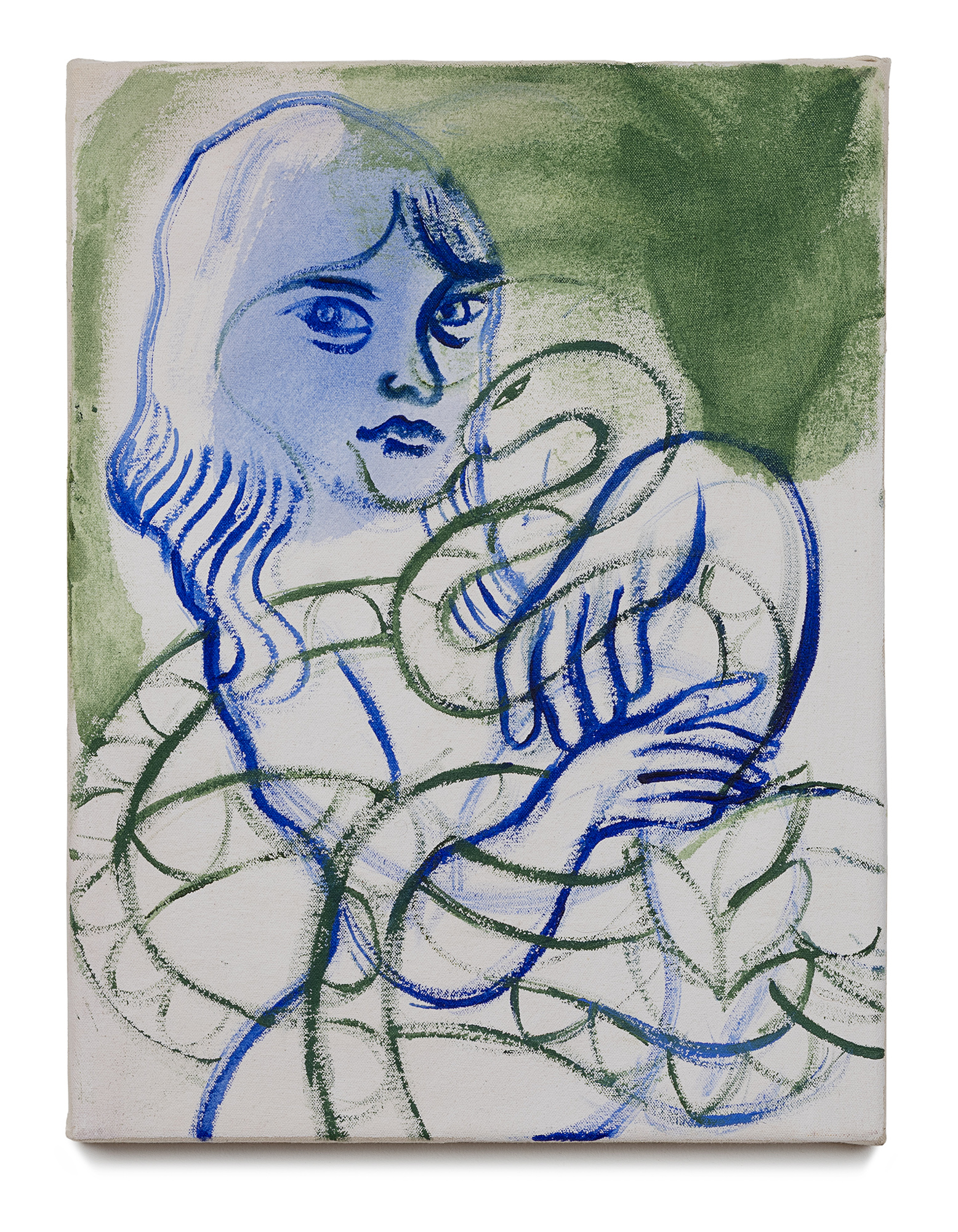
She talks to snakes and they guide her, 2025, acrylic on canvas, 40.8cm x 30.8cm. Image by Andy Bate.
If you go to your work to help reveal something, I want to know more about that process. Tell me a little more about how you approach working in the studio, and whether the way you work now has changed from how you first started.
I have found that some kind of structure to the way I work allows for a lot more spontaneity. I start most of my studio days drawing in ink. I begin drawing from life, usually something completely mundane, a self portrait beside a collection of brushes / a view out the window. Then I spend the next hour redrawing from this observational drawing, bringing in my imagination, disrupting the scene, on many sheets of paper, all the same size. This process feels closely linked to stream of consciousness writing (which I do daily when I wake up) and I feel emptied and excited by the exercise. By working fast, and in a short burst, the pressure is off, the valve released and parts of myself are quickly revealed, a tangle of worries, a double self-portrait grapple with myself, the shadow self again and again. It is and has always been a cathartic way of understanding myself and the world. These drawings are the route into the rest of my work.
This way of working became routine after the birth of my child, I would have an hour whilst he napped, and I would settle down into this practice.
The studio was a structure-less place before becoming a mother. Back then it was all a swampy surprise. I could start a studio day by hours of looking through books, hours of sorting drawings, nursing my creativity, and often not actually getting on with much making. When I did get there I’d lurch into it and be consumed for hours and hours, often leaving the studio at 2 in the morning, cycling back across London to bed.
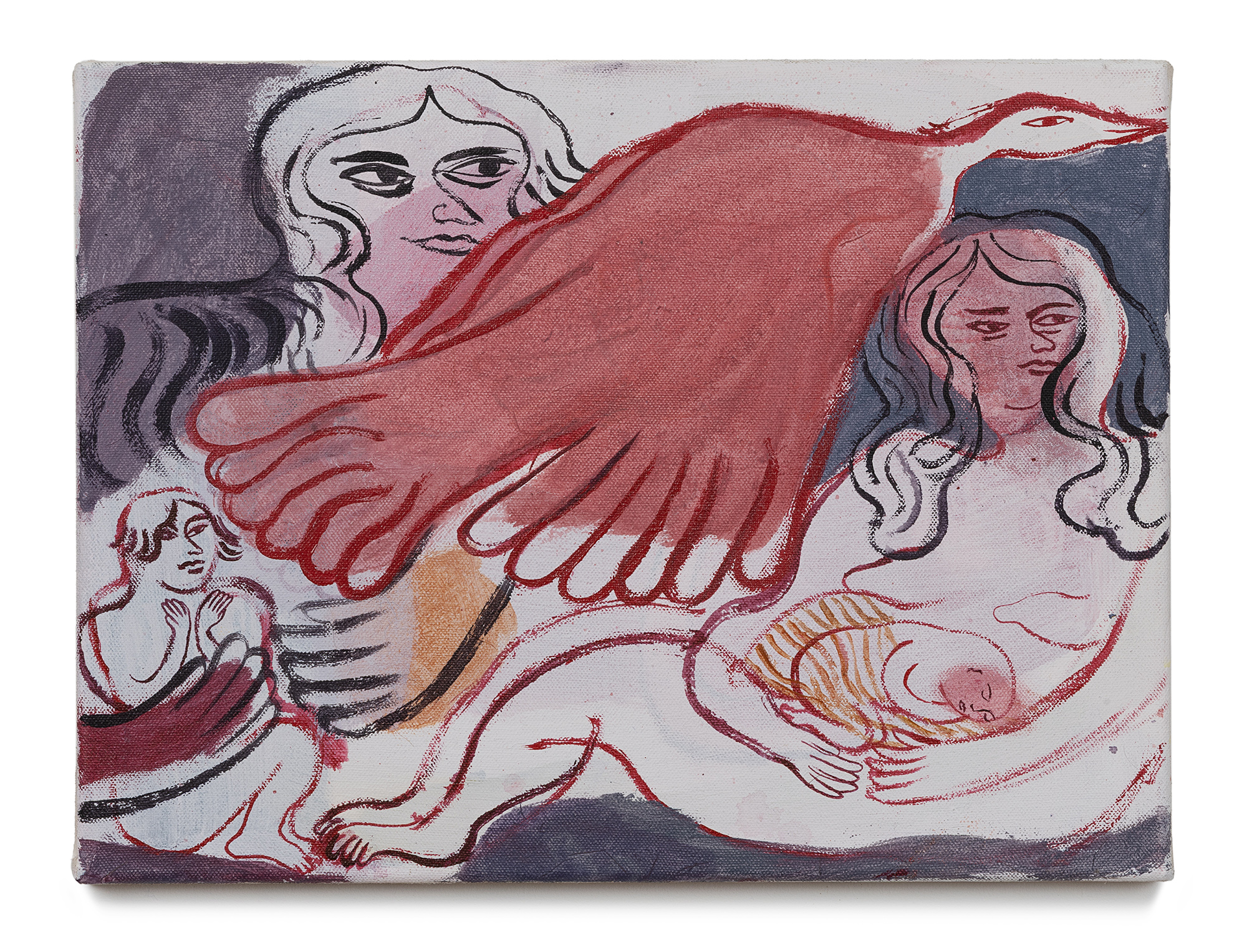
Red bird, sleeping baby, 2025, acrylic on canvas, 30.8cm x 40.8cm. Image by Andy Bate.
The studio is the place where people can picture the artist engaging in the creative act, but I also want to know if you find spaces outside of the studio to be just as important. I'm thinking in terms of finding inspiration or sources of creativity? If so, do you factor in time to explore?
My time at the Royal Drawing School really connected those dots for me. We would spend hours drawing all over the place, on the Heath at night, in the British Museum all day, the National Gallery, in central London in the evenings trying to capture the lights and the movement, under causeways, and I started to see that some of my more interesting work came from the moments when I felt out of control, had a looser grip on things, the studio can become quite business. One of my favourite places to make work is on the sofa in front of the tv. Keep the inner critic quiet with distraction.
I love a residency - the simplicity - I’m just back from a week in Portugal at Monte Da Japónica alongside my partner and child. The rhythm is hugely beneficial. Wake early, walk to the studio through the scorched earth cork tree countryside, making in the studio till lunch, lunch, play and looking and refilling my unstocked well in the afternoon.
So yes, making away from the studio is an essential part of my practice and, as much as the studio is sanctuary and home to my work, it is not held in higher regard to anywhere else to make work.
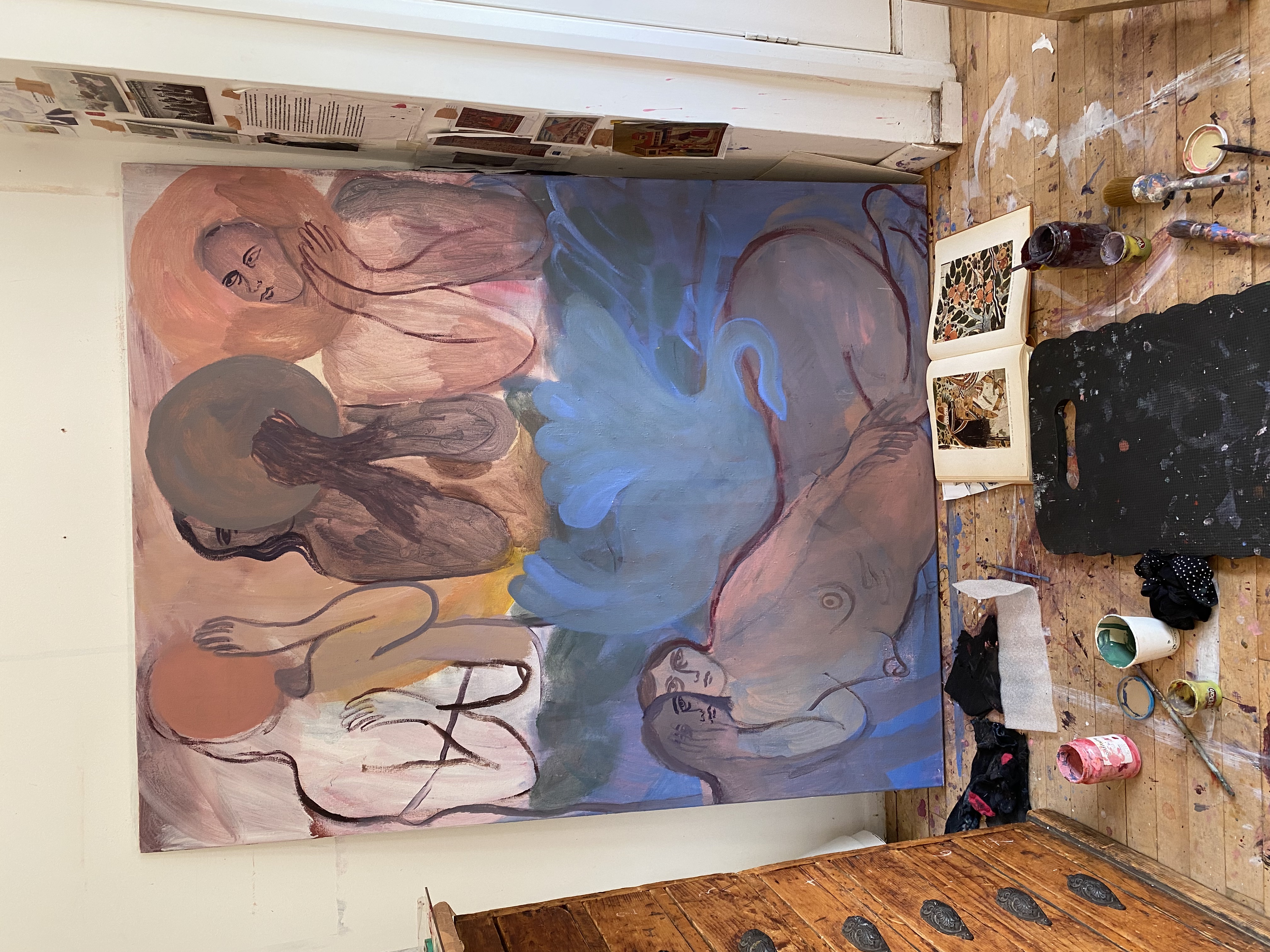
Image of the studio of Jessica Jane Charleston.
The residency sounds idyllic. The perfect balance between work and life, which feels very romantic in many ways. I think the life of the artist can often be perceived as being quite romantic, the creative searching for inspiration, with an open eye to the world around them. But I am also aware that this is certainly not always the case. I am interested to know a little more about the tough times in the studio (or out and about) when you haven't felt the creative spark to make new work, or when you might have been wrestling with a painting that just isn't behaving. Do you have moments like this, and could you share some stories?
Being an artist is certainly not all roses although the high points can feel very high, like an idyllic residency.
I support my practice by teaching at the Royal Drawing School sporadically and I also freelance at a picture framers. These supporting jobs provide just enough income on a monthly basis to free me up artistically.
There are so many other aspects of being an artist I’ve had to learn - accountant, promoter, framer, researcher, cataloguer, shipper…
After shipment was organised for my solo show with CULT Aimee Friberg gallery in San Francisco last April, Trump made tariff changes the same week and when my work reached the USA it got stuck in customs for 10 days, missing the opening night.. It was such a let down but fortunately the smaller canvases had been shipped at an earlier date so these were exhibited alongside a large mural which grew and grew to take up more space.
Of course I get frustrated and feel lost in the making of the work but it’s everything around making the work that is the challenge. Wrestling a painting and being confronted with feelings of inadequacies are all necessary and meaningful things to work through. It’s all the admin around the making that is the hard bit.
I’m rarely stuck for an idea because the work is so process driven. I start mixing paints, drawing from life and I’m off.
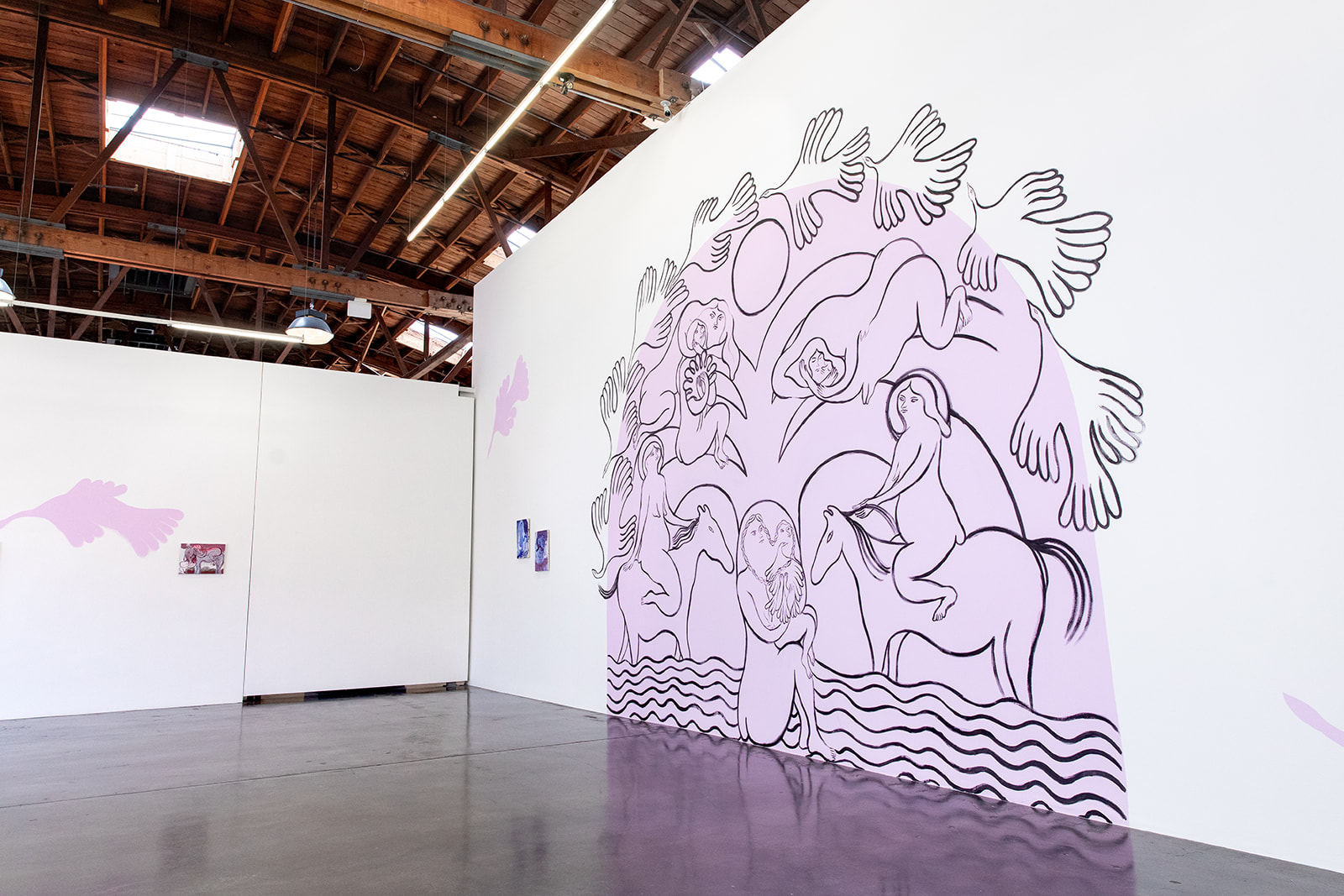 Nightsong, installation view, CULT Aimee Friberg, San Francisco, 2025. Photography by Nicholas Bruno; courtesy of CULT Aimee Friberg.
I appreciate you being so open and honest about some of the challenges around your recent show in San Francisco, as I imagine there is always a part of you, as is the case for most artists I speak to, where you feel the need to always speak about the positive elements of being an artist and getting the opportunity to show your work. But like you say, it's not always sunshine and roses.
I want to come back to other ways you find inspiration for making. When I look at your work, I think a lot about literature, and I build stories for the characters in my head. I wondered how much the writing of others plays into the work? On that thread, I wondered if other artists' paintings also play a role in fuelling your approach, and if you have other artists' work in mind as inspiration?
I love that. Storytelling is an important part of the work. Although the story is only revealed to me once the work is done. Not knowing what the work is about til afterwards is key for me. Often I’ll start with an emotion. Or sometimes just a shape, a curve of a line, a self-portrait, whatever hooks me in, I’m not picky how it gets going, once I’m in - I let myself be led.
Drawing from artwork is something I’ve always done and continue to do, so I’m sure references from other places weave into the work too.
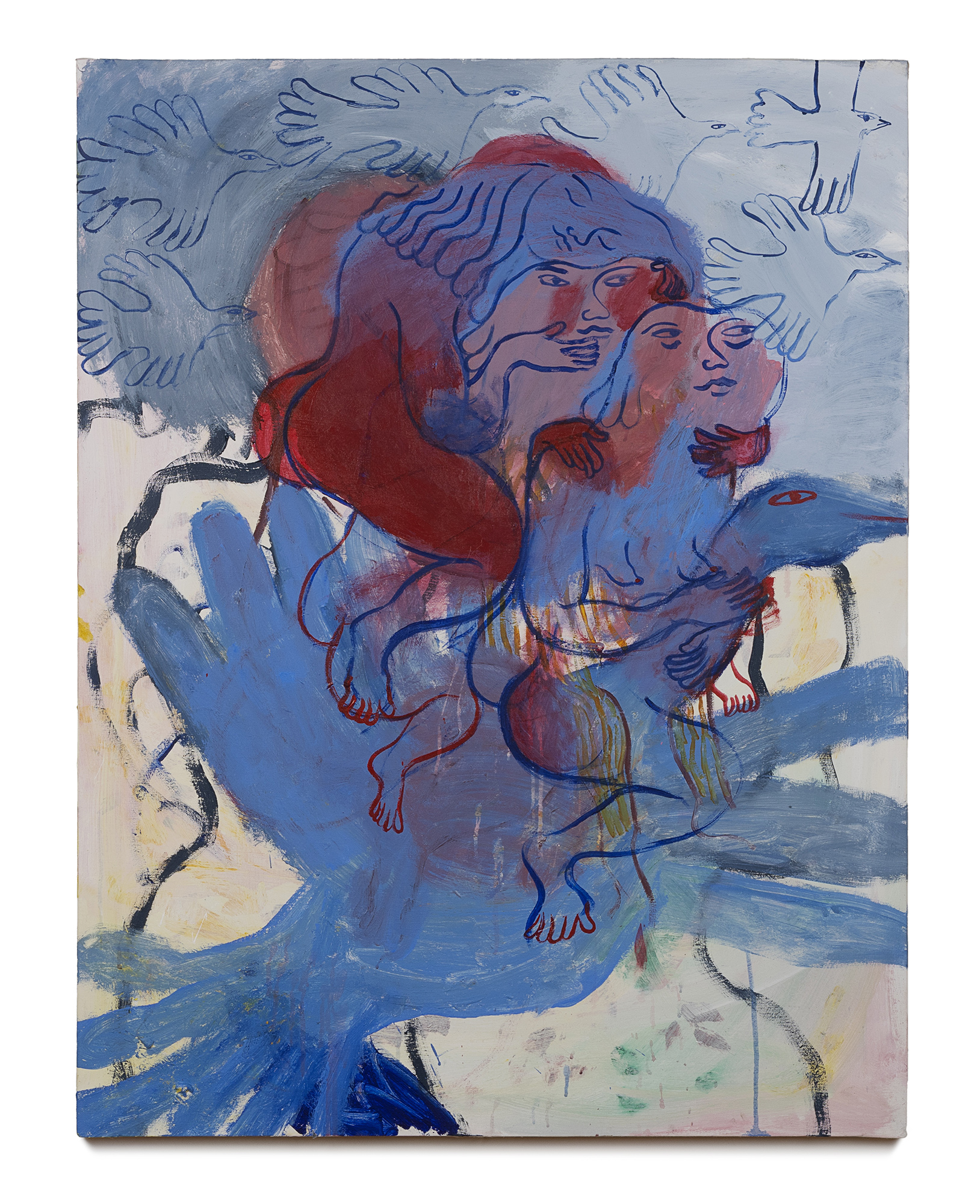
Blue flight, 2025, acrylic on linen, 111.6cm x 86cm. Image by Andy Bate.
My dad is a poet, he is nearly 80 now and runs a second hand bookshop. I grew up with a lot of books (and am still surrounded by them) so their influence is undeniable. Unlike my mother, father and brother I’ve never been a natural reader. I’d much rather look at the pictures. But poetry is important, the transformational quality of a poem, the saying something so connecting and obscure at the same time, and I love it when painting does the same thing. That feeling, ‘yes that’s it, but I have no idea why’.
I have a lot of books in the studio, Egyptian, medieval, children’s books next to the likes of Ken Kiff, Arpita Singh, Vanessa Baird, Philip Guston… and so much more…my muse library.
I love interviewing painters. Mainly because no matter how articulate and poetic a painter is (and you are both of those things in buckets), they are still trying to describe something more like a feeling. Trying to verbalise something slippery and slightly out of reach. Literature, references, stories and inspiration are as close as we can get to describing what it's like to actually stand in front of a painting and truly experience it.
I really appreciate your time Jessica, so one last question. What's coming up for you?
What’s coming up!
Next show — I’m excited to be showing new work at Soho Revue in April 2026 in collaboration with Binder of Women. They have invited a group of female/female identifying artists to work together. The exhibition celebrates each artist as an individual and the shared conversations that emerge when the artists choose to champion and collaborate with one another. I’ll be collaborating with two artists I adore and ones I shared The Drawing Year with: Alice Macdonald and Joana Galego.
In the studio — I’m looking forward to doing some larger canvas work in 2026 and playing more with fabric drapery drawings.
And what’s come up from our conversation— when we first spoke we talked about how we consider our relationship to art long term. Realising that looking back over (hopefully) a long life and practice, the specific shows won’t matter, but the deepening of the relationship to the work will. We talked about ‘self-imposed urgency’ and I’ve been thinking about my practice in a more sustainable way since then. Thinking about whether an opportunity allows for connection and time to make the work I want to make. To engage more. That’s the best bit and the part to protect.
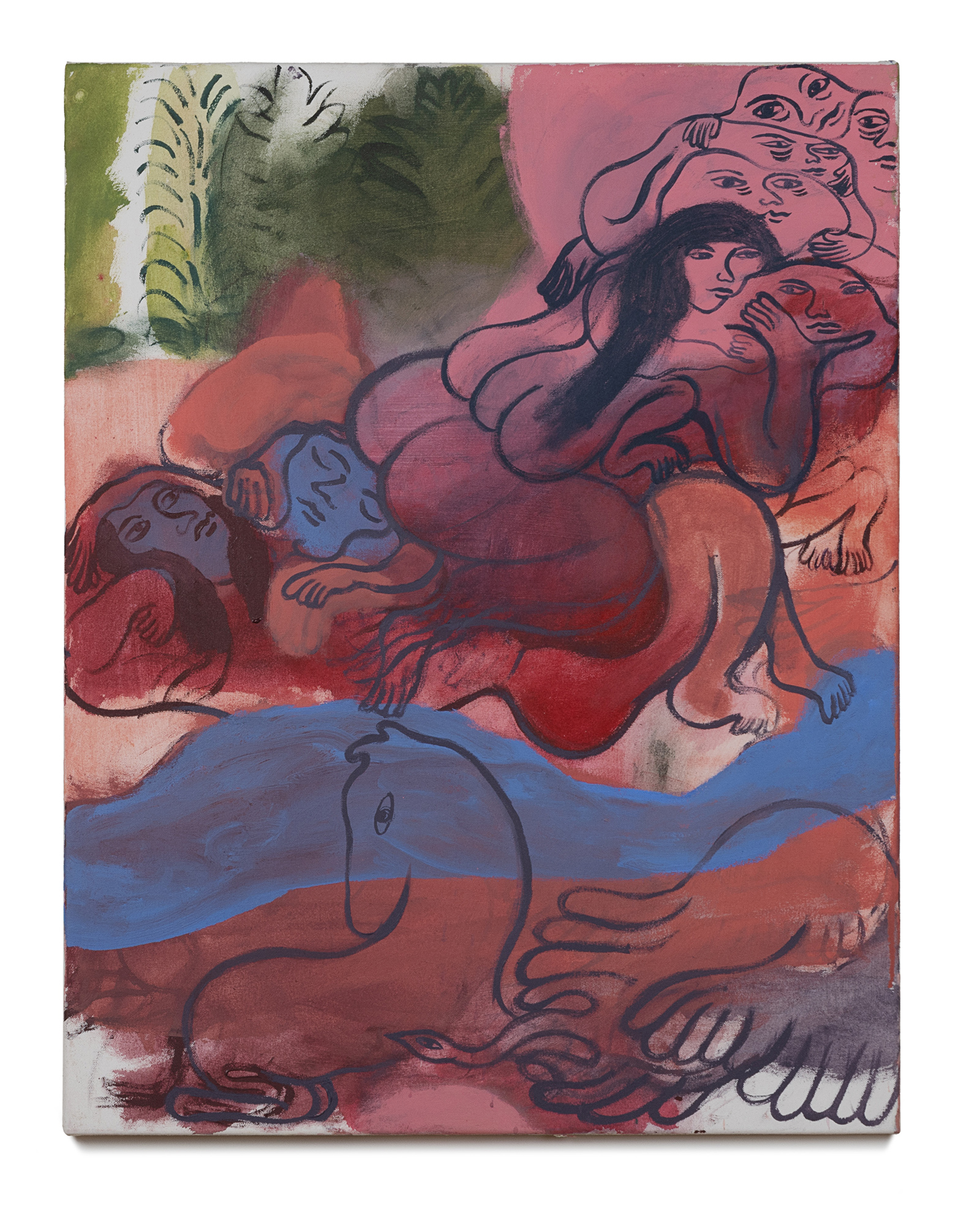 All your thinking, 2025, acrylic on canvas, 91cm x 71cm. Image by Andy Bate.
Cover image by Andy Bate.
-
︎ @jessicajanecharleston
jessicajanecharleston.co.uk
-
If you like this why not read our interview with Hannah Hornby & Simone Marconi.
-
© YAC | Young Artists in Conversation ALL RIGHTS RESERVED