Interviews with Artists
Joey El Haddad
-
Interview by Buyun Wang
-
Published in February 2026
-
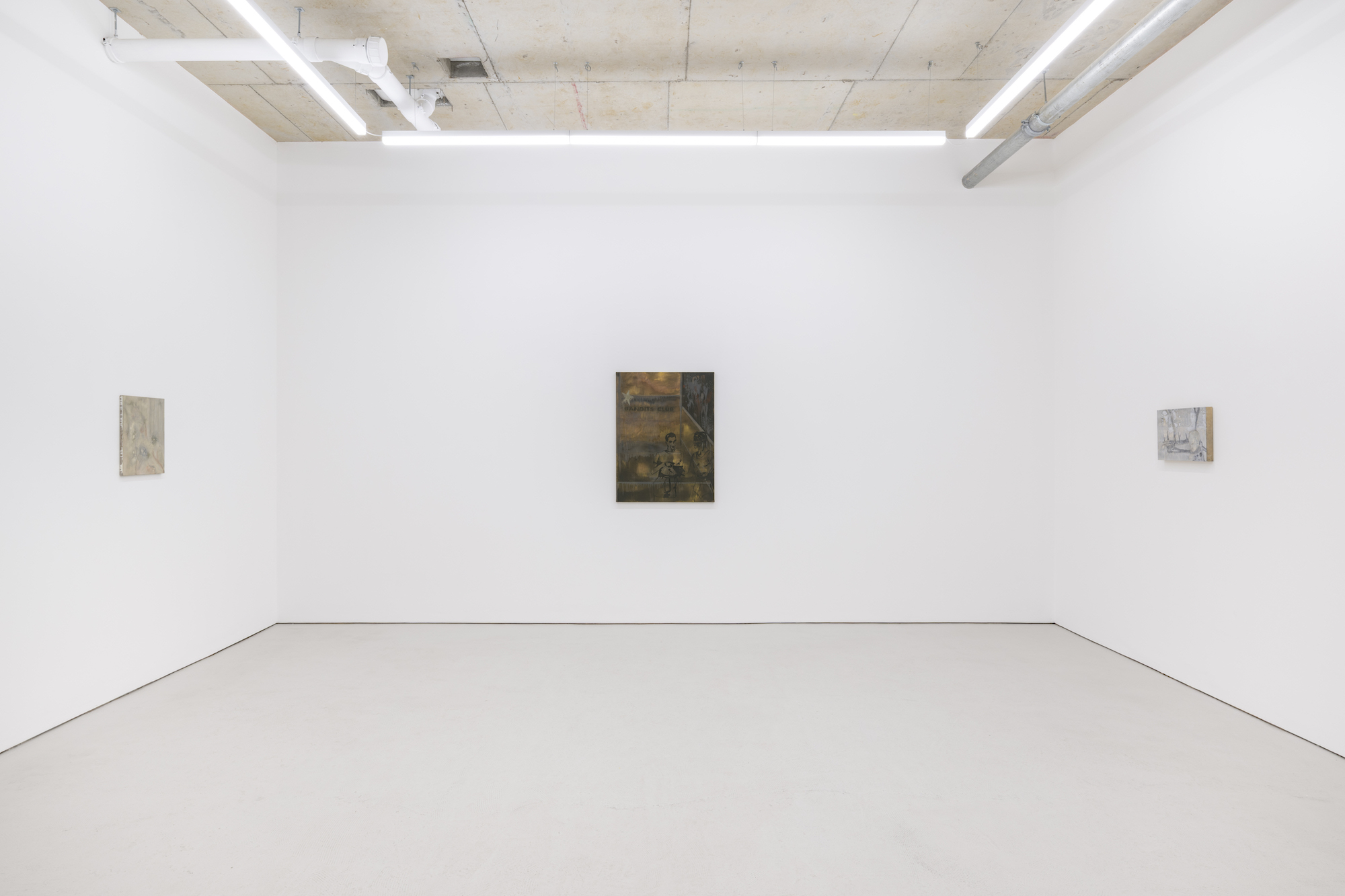
Joey El Haddad: Glasschord, William Hine, London, 12 February - 21 March. Photo: Damian Griffiths
Glasschord is your first solo exhibition since completing your academic training. What have you been primarily engaged in since graduating?
Since graduating I’ve been focused on deepening the internal logic of the work itself. Much of my time has been spent drawing, making collages, returning to archival material, and allowing paintings to develop slowly through interruption and reworking.
Alongside this, I’ve been attentive to maintaining a sustainable rhythm—giving the work enough time and space to unfold without rushing its conclusions. Glasschord emerged from this quieter period, where the work was able to expand organically and on its own terms.
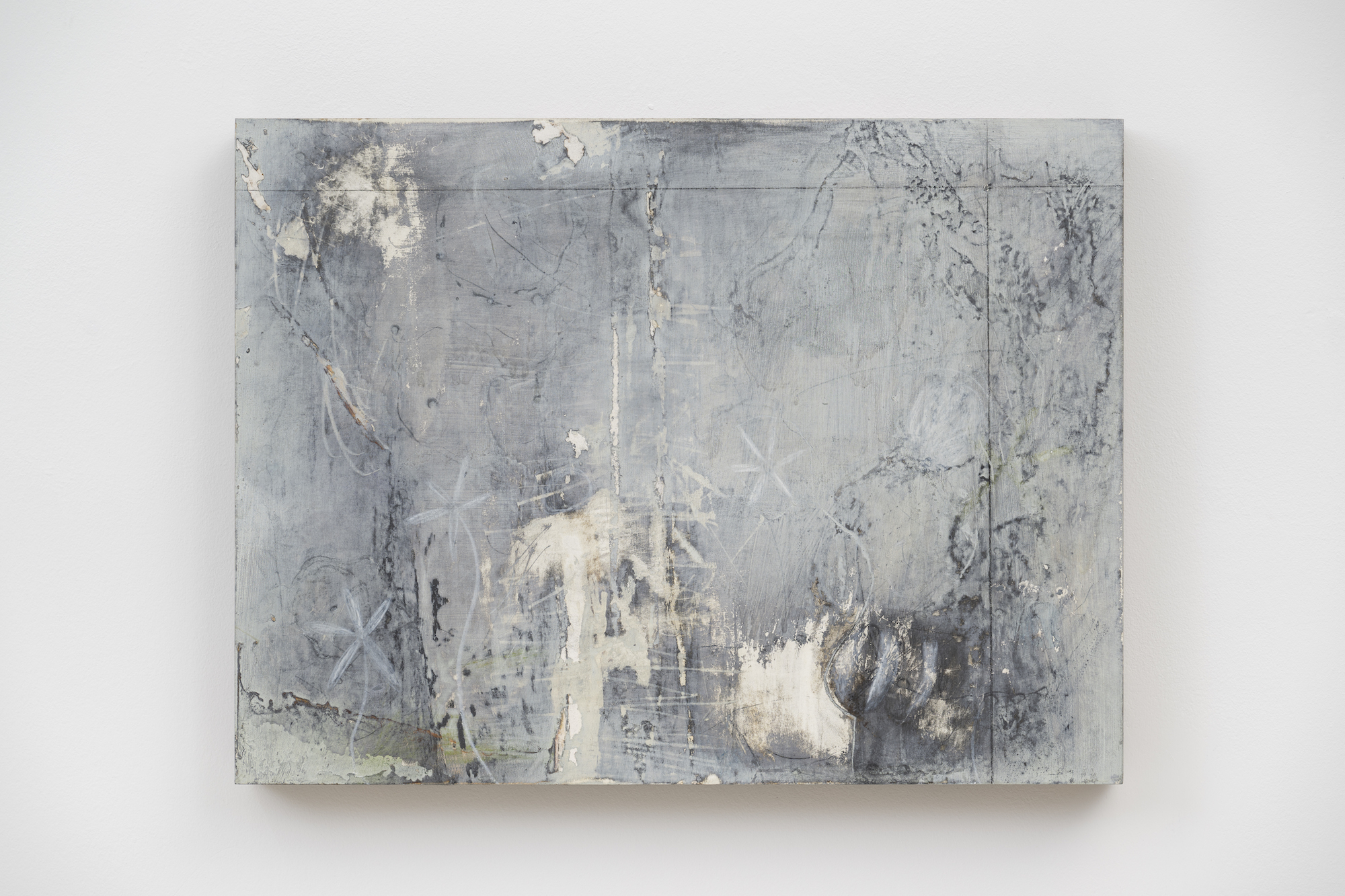
Normcaster, 2025 Liquid graphite, coloured pencil and oil on clayboard 30.5 cm × 40.6 cm. Photo courtesy the artist and William Hine, London. Photo by Damian Griffiths.
Your work seems to be evolving from identity and social experience toward a more open yet unstable visual language. What is the most crucial and recurring question in your current practice?
The recurring question in my practice is how a painting can hold emotional and historical weight without fixing it into a single narrative. I’m interested in how images can remain porous—how they can carry memory, conflict, or residue without becoming illustrative or explanatory.
Rather than asking what an image represents, I’m more concerned with what kind of psychological or emotional climate it produces. That question keeps the work open and resists closure.
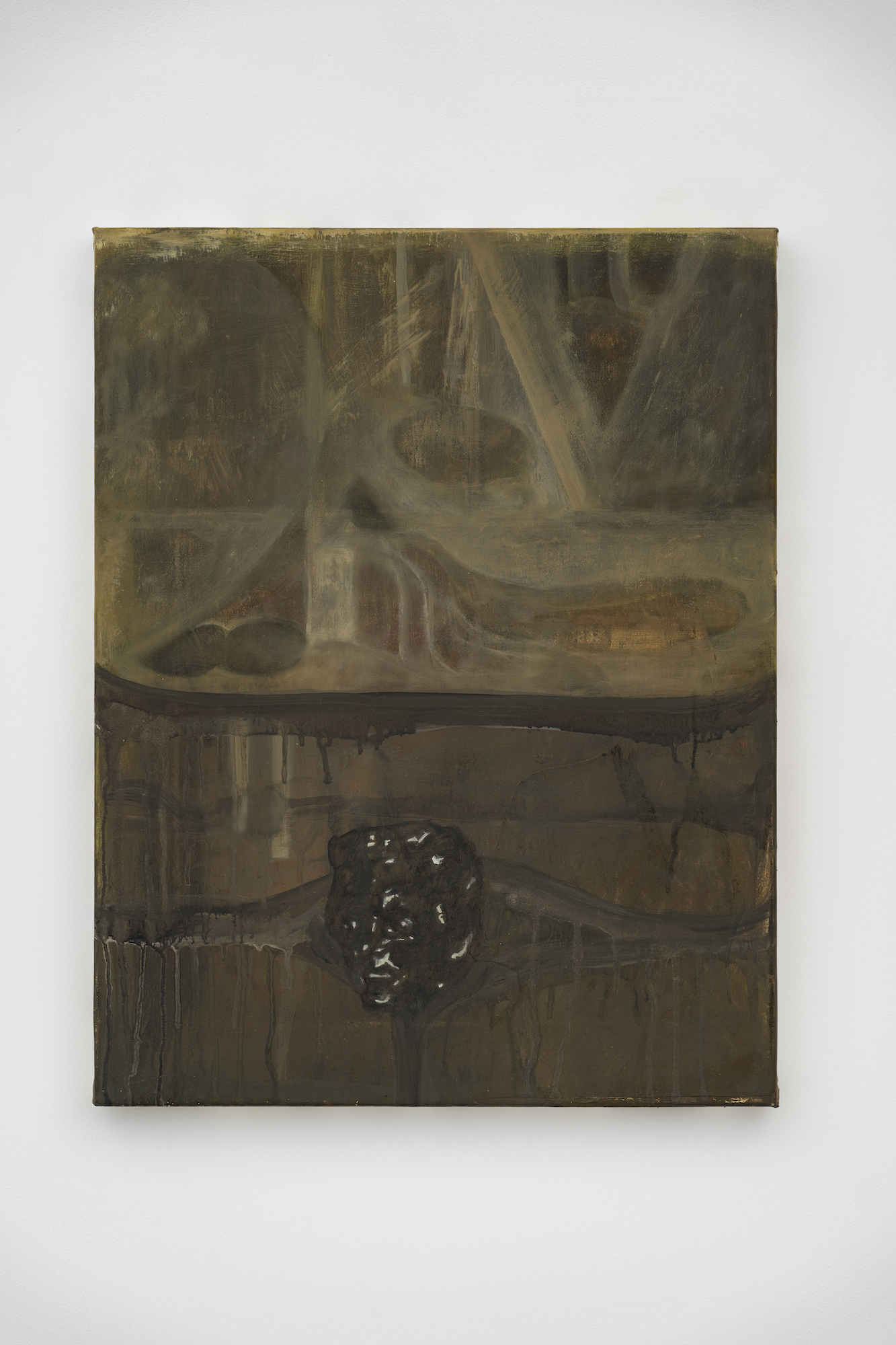
Milo, 2025 Oil and paper on linen, 45 x 35 cm. Photo courtesy the artist and William Hine, London. Photo by Damian Griffiths.
Your paintings often undergo extended periods of revision and reworking. At what point do you typically realise a work is ready to be set aside?
A painting is ready to be set aside when it stops asking for intervention. That doesn’t mean it feels resolved or complete in a conventional sense, but that further work would begin to close it down rather than open it up.
I’m attentive to moments when the surface starts to hold its own tensions—when erasures, traces, and interruptions coexist without cancelling each other out. If I sense that clarity is becoming too dominant, that’s usually a sign to stop.
This new series appears narratively more ambiguous, relying heavily on the reprocessing of existing images and historical materials. How do you achieve this "aesthetic recycling" in your practice while avoiding the original semantic frameworks of the images?
I approach archival material as something to be interrupted rather than preserved. The images I work with—political cartoons, advertisements, documentary fragments—often already contain ideological residue. I’m not interested in reproducing their original meanings but in displacing them.
Through processes of erosion, partial visibility, and material interference, the image is pulled into a different temporal and emotional register. It becomes less a document and more a residue. The original framework dissolves, and what remains is a trace that operates atmospherically rather than narratively.
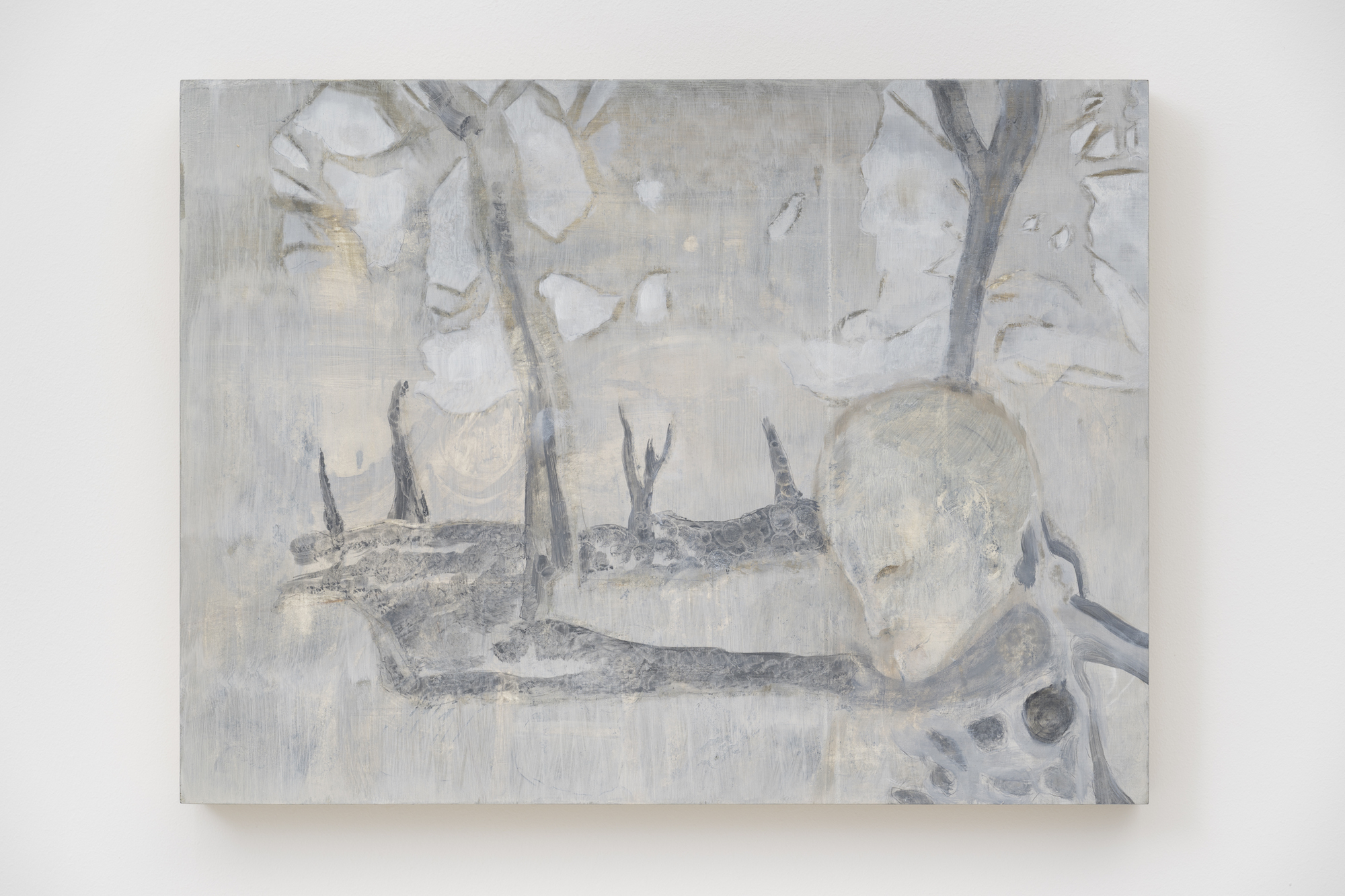
Circumcloud, 2025 Oil on clayboard 30.5 x 40.6 cm. Photo courtesy the artist and William Hine, London. Photo by Damian Griffiths.
In your work,space and structure often feel less like concrete locations and more like psychological or emotional frameworks. Simultaneously, the sense of time frequently overlaps and shifts. How do you understand the relationship between "architecture" and time in your work?
Architecture in my work functions as a psychic scaffolding rather than a literal environment. Thresholds, barriers, and planes act as emotional structures, shaping how figures and forms relate to one another.
Time behaves similarly—it folds rather than progresses. Different temporal layers coexist, producing spaces that feel excavated or suspended. Painting allows these layers to remain unresolved, resisting the linear logic that architecture and perspective often impose.
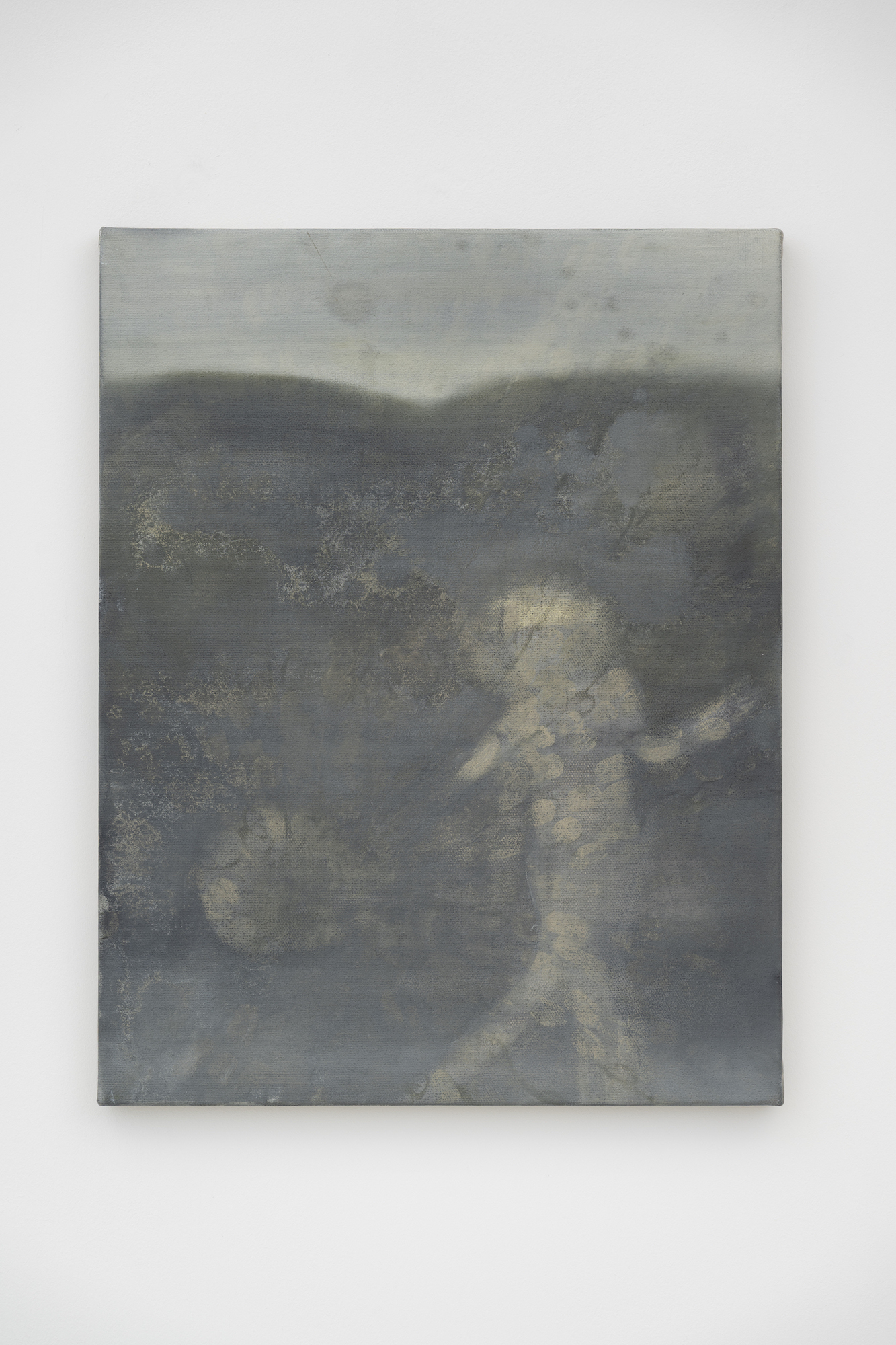
Noctidrizzle, 2025 Oil on linen 45 x 35 cm. Photo courtesy the artist and William Hine, London. Photo by Damian Griffiths.
You've mentioned wanting to explore different media like sculpture, installation, or collage in the future. For you, does the concept come first, then you seek the appropriate medium, or does the medium itself, conversely, drive your thinking and creation?
I don’t separate concept and medium very clearly. Often the medium emerges through the demands of the work itself. Drawing, collage, or painting appear when they feel necessary rather than planned.
Painting remains central, but I don’t see it as exclusive. If a form outside painting allows the work to articulate something more precisely, I’m open to following that direction.
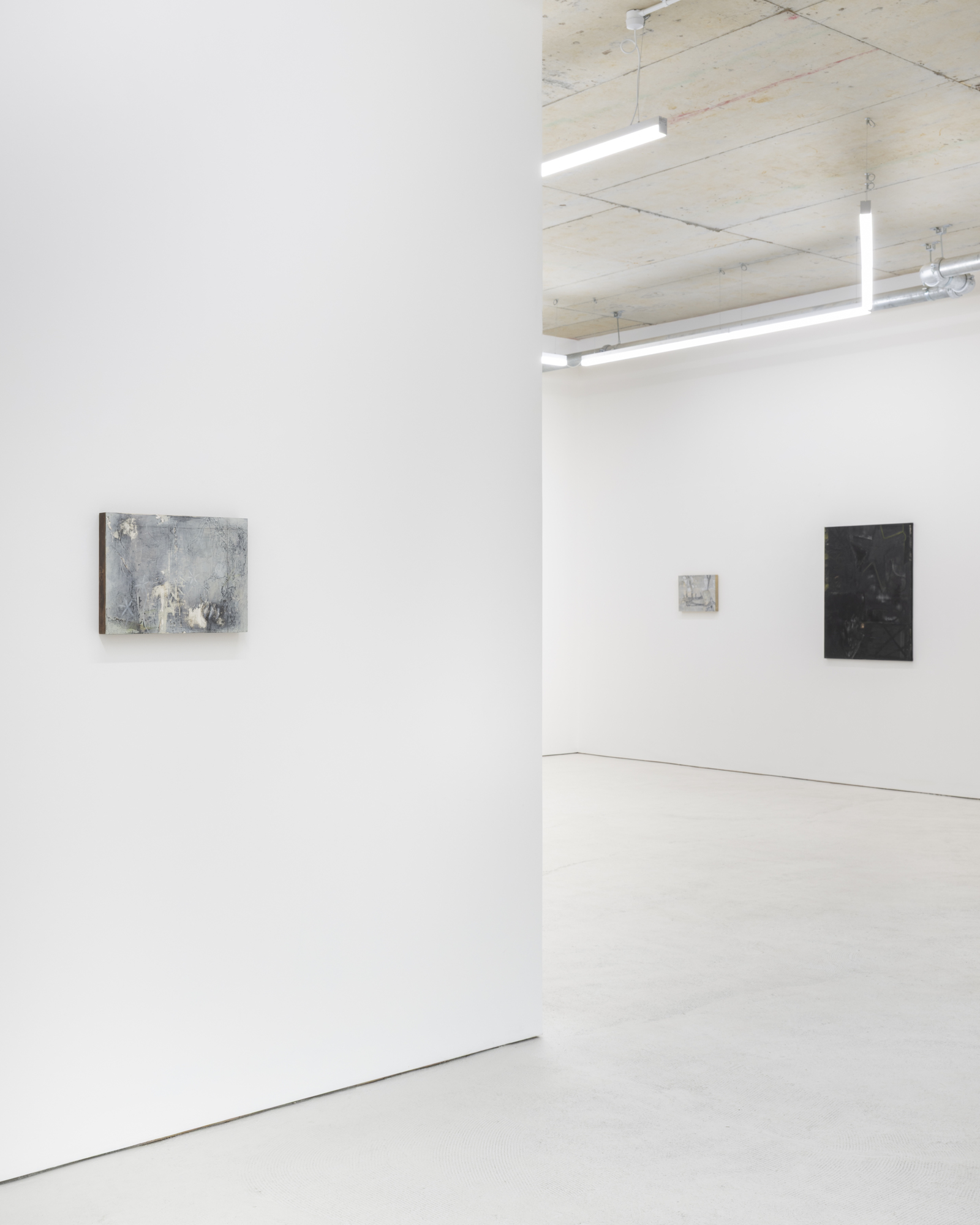
Joey El Haddad: Glasschord, William Hine, London, 12 February - 21 March. Photo: Damian Griffiths.
_
Joey El Haddad: Glasschord is on view at William Hine Gallery, London from 12 February - 21 March, 2026
-
Joey El Haddad (b. 1999, Beirut, Lebanon) lives and works in London, UK. El Haddad graduated with an MA in Painting from the Royal College of Art, London (2023-24) and a Distinction in his Graduate Diploma in Fine Art from the Royal College of Art, London (2021-22).
Selected exhibitions include Fragments, Projects Kavel Rafferty, Margate, UK (2024); Fall Protection Only, The Upper Gulbenkian Gallery, London, UK (2024); MA Graduation Show, Royal College of Art , London (2024); Mise-en-scène, Safehouse 2, London, UK (2023); Cast a Shadow, Safehouse 1 & 2, London UK (2022).
Buyun Wang is an independent curator and freelance writer. His work engages with collective practices and self-organised approaches. He is currently undertaking a PhD in Curating at the University of Reading.
-
︎ @joeyhadddad
joeyelhaddad.com
︎ @buyunw17
︎ @williamhinegallery
https://www.williamhine.com/
-
If you like this why not read our interview with Jessica Jane Charleston.
-
© YAC | Young Artists in Conversation ALL RIGHTS RESERVED